
Book Review: Grief Is Love by Marisa Renee Lee
Some books on grief teach you about grief. Grief Is Love by Marisa Renee Lee sits beside you in it.
What I appreciated most about this book is that it is written from the perspective of someone who has experienced grief in many forms. While clinical language can be helpful, there is something deeply validating about learning from someone who speaks from lived experience. Lee does not position herself as an expert standing at a distance from pain; instead, she writes as someone who has walked through it, carrying loss in her body, relationships, and daily life.
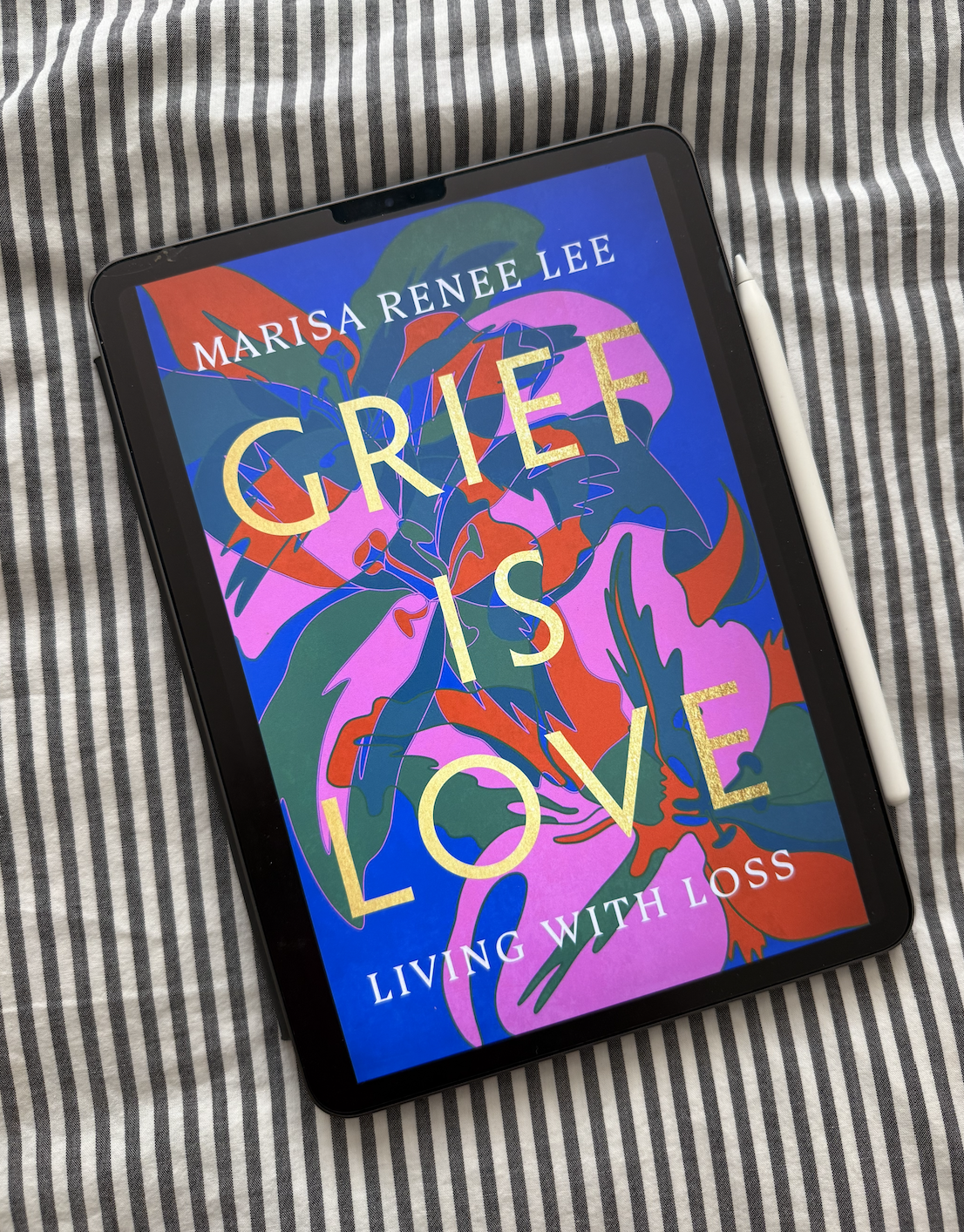
Throughout the book, Lee shares how grief shows up across different areas of her personal life, how it shapes identity, relationships, routines, and even moments of joy. Grief is not confined to a single chapter or event; it weaves itself into the out day to day life. I appreciated her honesty in naming how grief doesn’t simply “resolve” but continues to evolve, sometimes quietly and sometimes loudly.
Another powerful aspect of Grief Is Love is how Lee emphasizes care beyond therapy. While she acknowledges therapy as a supportive and meaningful space, she makes it clear that healing did not happen in isolation. The presence of people: friends, chosen family, community, and those willing to sit in the discomfort, was just as essential, if not more so. This felt especially important, as it pushes back against the idea that grief is something we are meant to process and move on from, under many societal norms and pressures.
Lee reminds us that grief is relational. It is held, witnessed, and softened through connection. The book gently underscores that care can look like many things: being believed, being remembered, being checked on, and being allowed to grieve without timelines or expectations.
For anyone navigating loss, supporting someone who is grieving, or simply wanting a more human and compassionate understanding of grief, this book is a meaningful and grounding read.
Grief may change us, but as Lee so beautifully shows, it also connects us to love, to memory, and to one another.
De Aqui y De Allá,
Elsa Matsumoto, LCSW, PMH-C
